
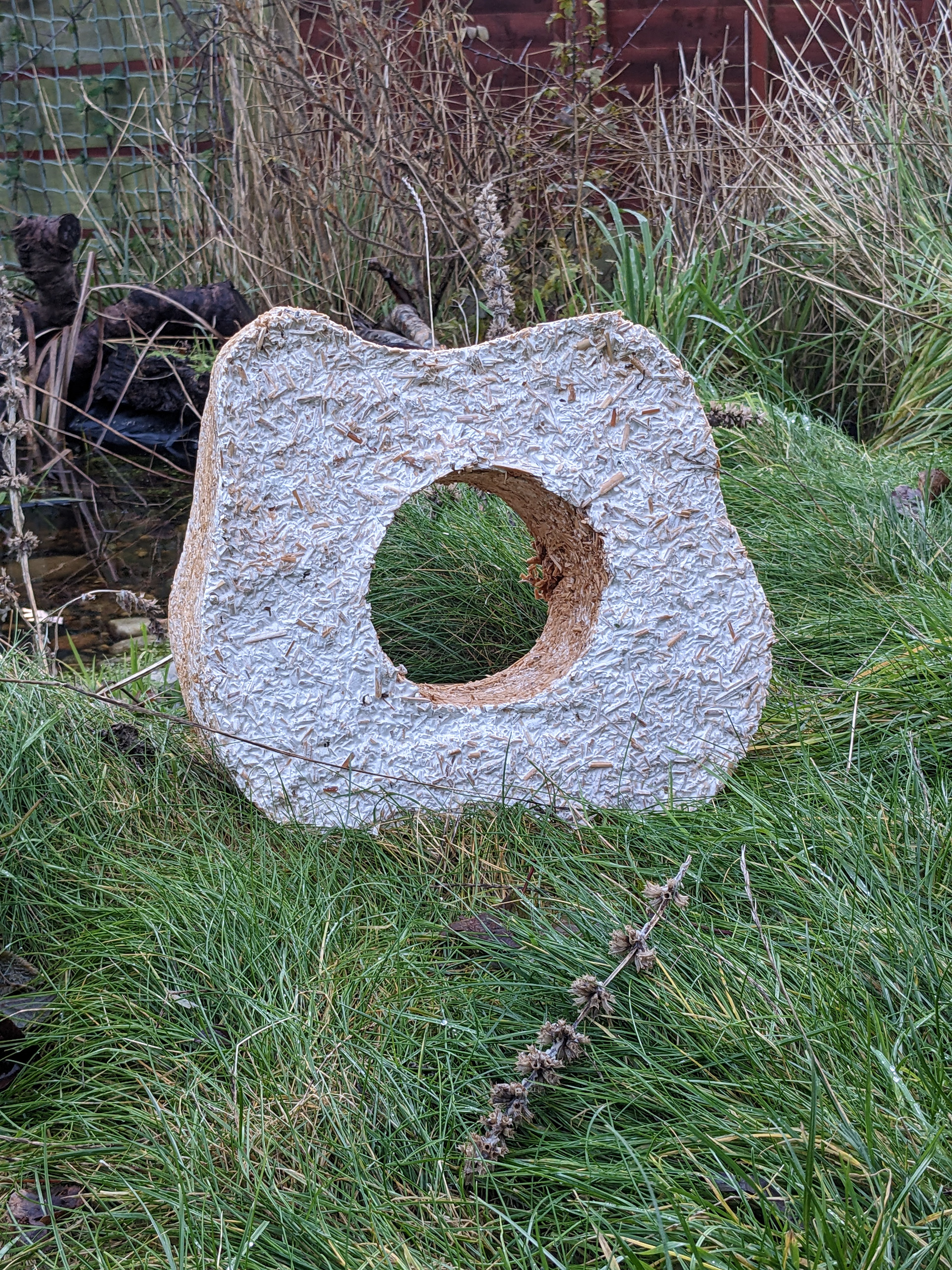
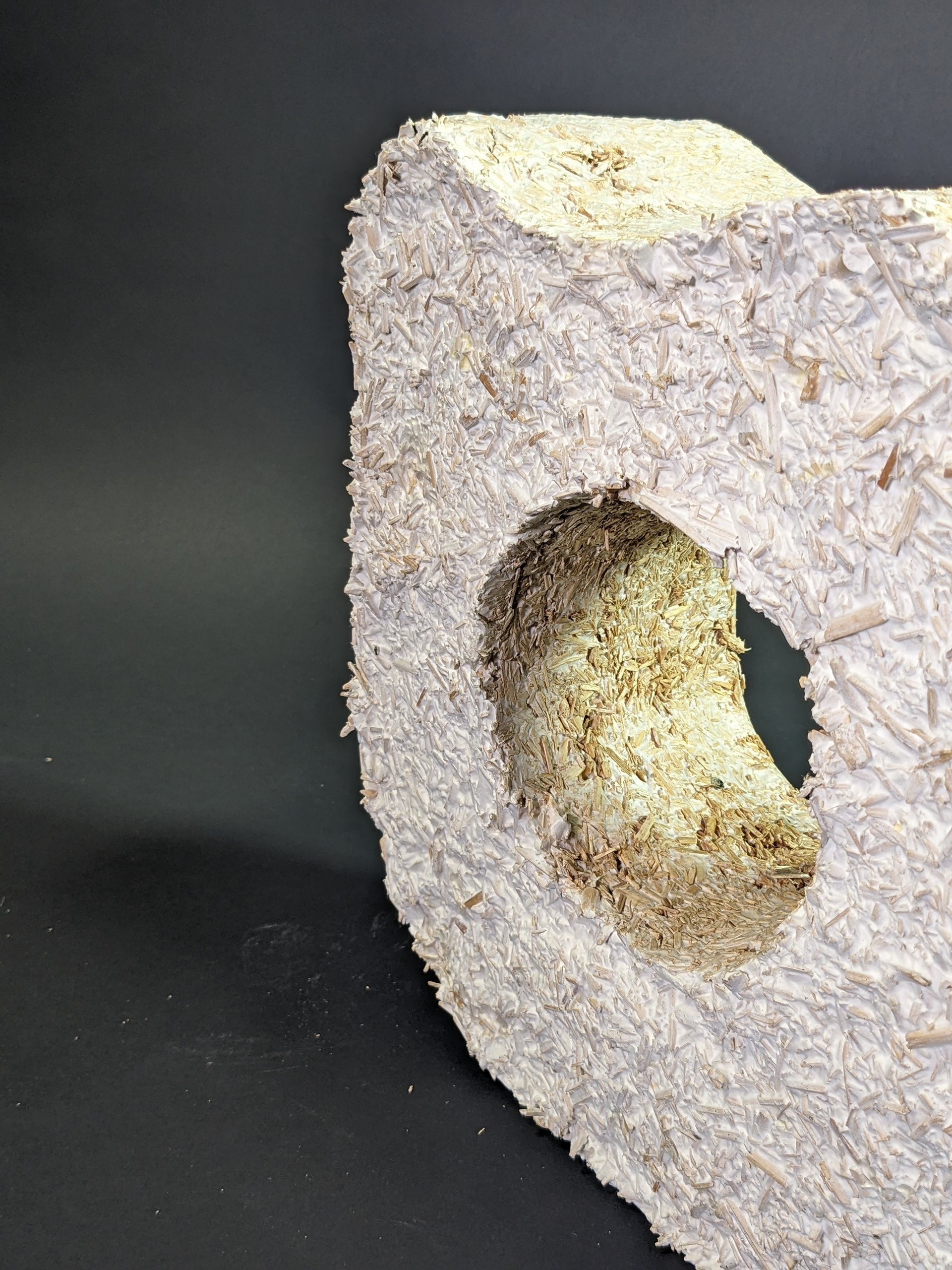
Mycology 2022. Material; mycelium on waste hemp substrate, approx 40 cm x 40 cm
Tasked with making an impermanent sculpture connected to place, I chose to use mycelium in this piece.
Mycelium is the root-like network of a fungus - a vast web of fine, thread-like fibres spreading through soil and decaying matter, almost entirely hidden from view yet fundamental to the ecosystem it inhabits.
On my first visit to Burrator Reservoir I noticed plentiful fungi in the wooded areas, no doubt enjoying the damp and shady conditions together with the rotting wood of fallen trees. This gave me the idea to research mycelium as a material, discovering that in the Devonian period there would likely have been giant fungi-like organisms in the area.
Mycelium is a fascinating subject - an organism which has the ability to communicate with, not only itself, but other plants and trees, forming a system of symbiotic welfare. Indeed, trees use mycelium to communicate with each other and can choose to help by sending more sustenance, or to warn neighbouring trees about extreme weather through these root systems.
The largest living organism on earth is a Honey Fungus, mostly mycelium, at three and a half square miles.
It poses a germane question: can humanity learn from these organisms how to better communicate and create a mutualistic world for all living things?
For further reading on this subject I highly recommend 'Entangled Life' by Merlin Sheldrake
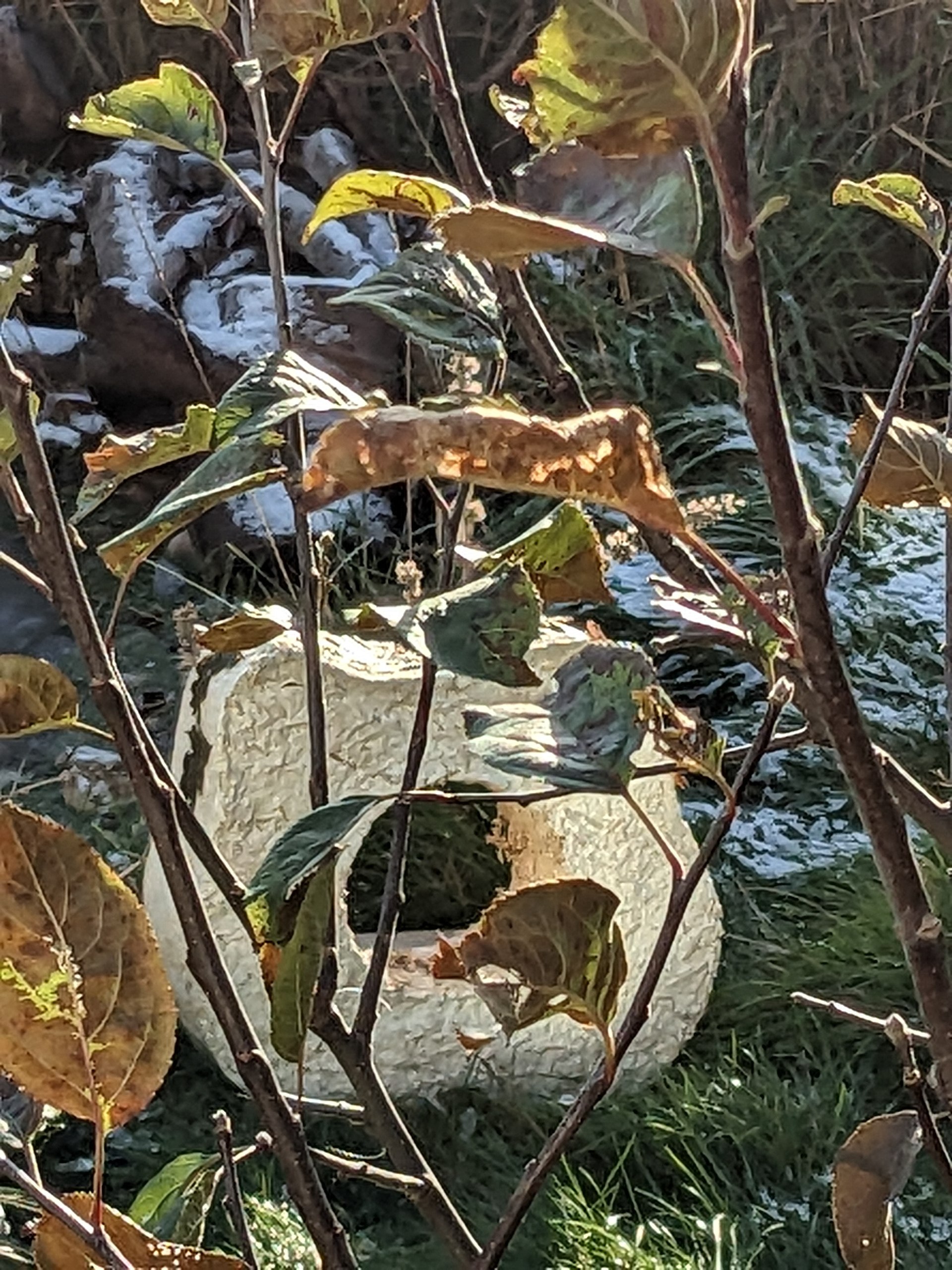
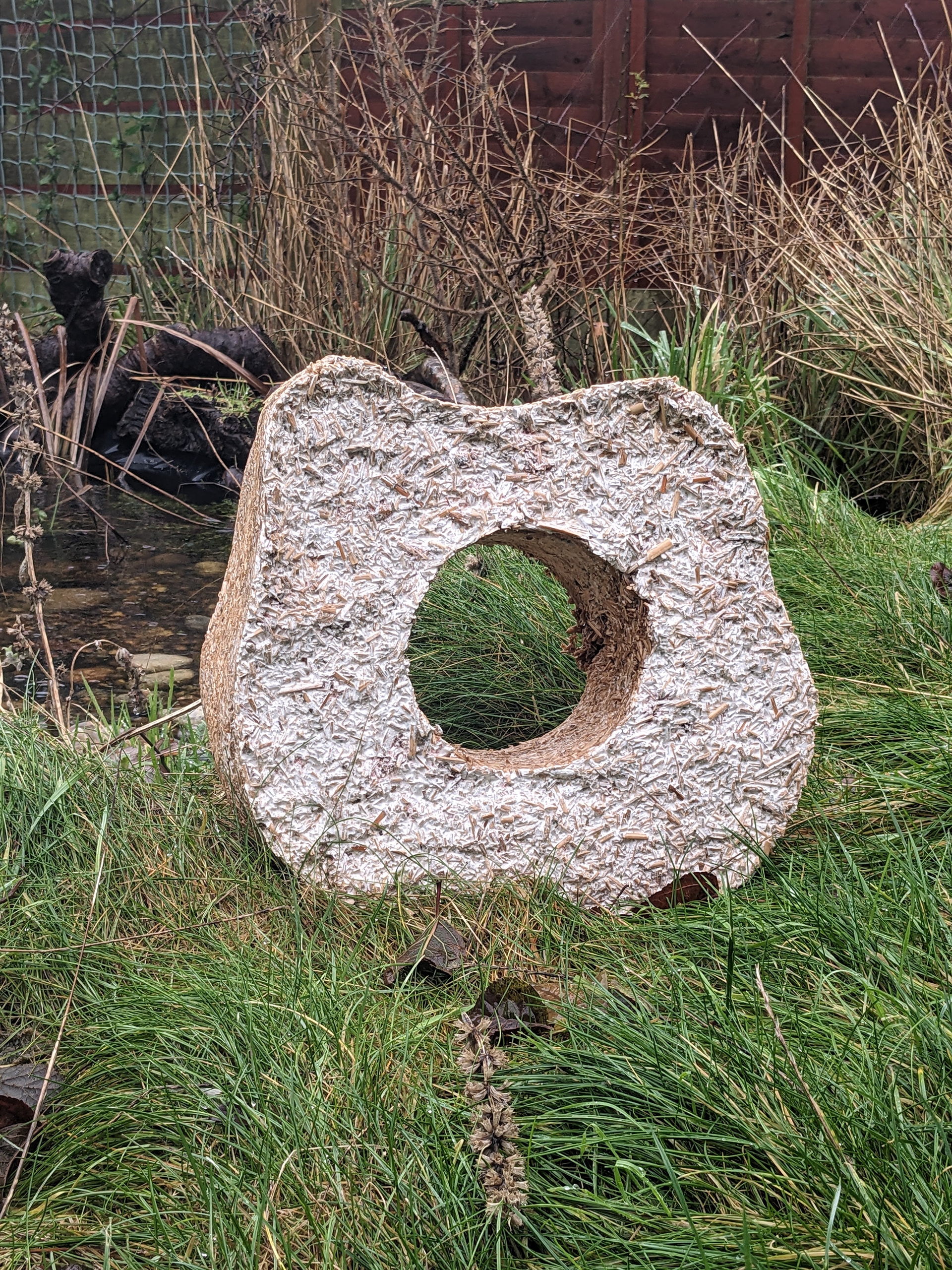
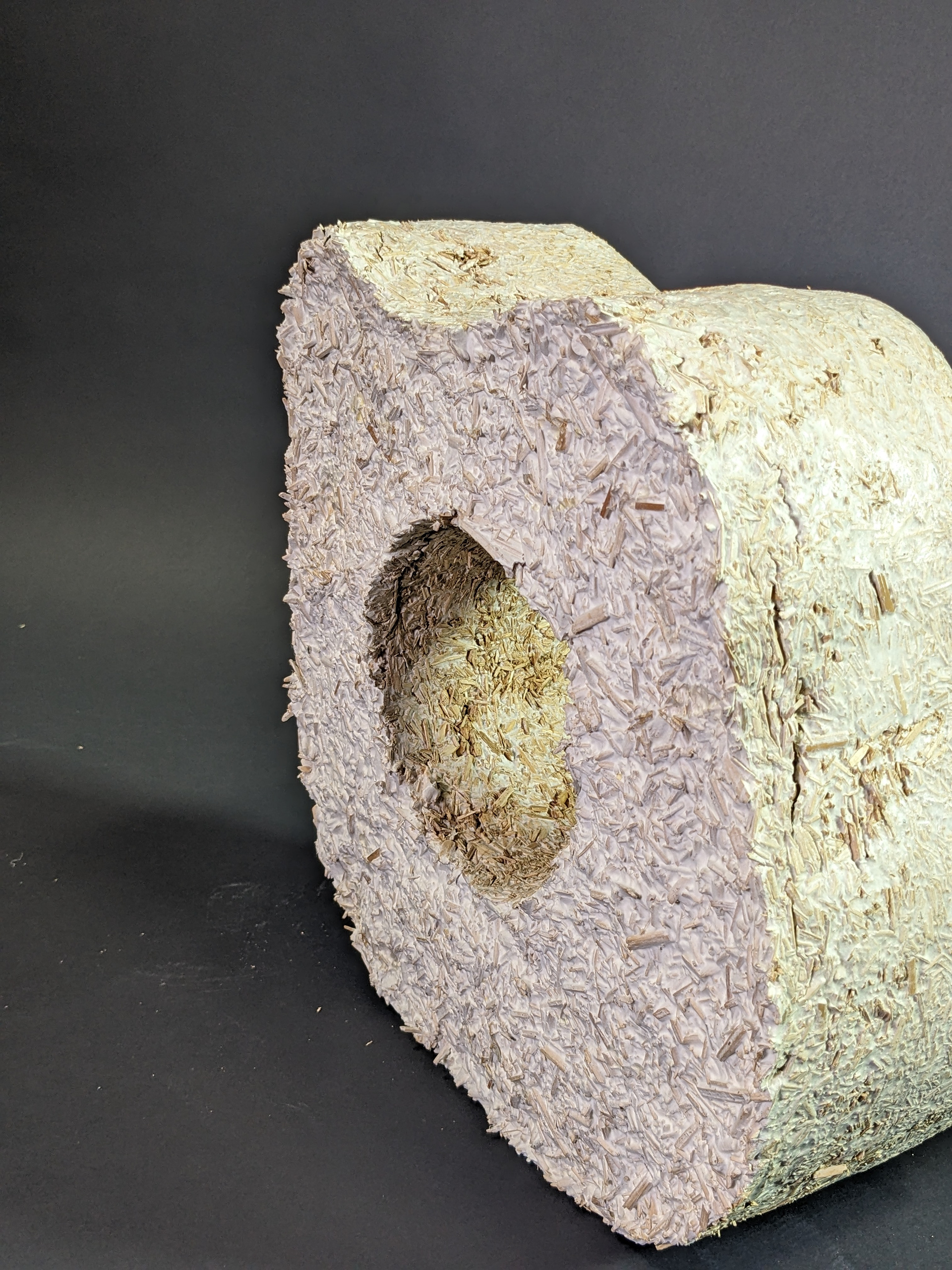
Photography Claire Jones